For a delusional moment, The Dad congratulated himself on his family's good fortune.
Both daughters were happy to see the start of the new school year. At their ages, The Dad dreaded the end of summer and hated having to go back to the classroom. His daughters, through good fortune, and maybe (not to brag or anything) good parenting, had no such attitude. They were raring to go back. Who knew what advantages that enthusiasm for education would bring them over time?
Then the Second Grader brought home a page describing the homework rewards program for her class. Complete your assignments, and you get sweets, treats, toys and accolades. The page brought The Dad back to reality. And provoked a few recent memories.
Both daughters had been in classrooms where the students got prizes for going several days without discipline trouble. Every child's birthday earned recognition. Some rooms named a star of the week, every week, not as reward for extraordinary behavior, but just to make sure every kid got a turn to be a big shot. Add to that the daily recesses, the regular dispensing of goodies, and the dramatic praise for every positive behavior, and it was no wonder that the daughters wanted to get back to school.
What kid wouldn't? The modern classroom is a full time joyride. The Dad realized that, as special as his daughters are, their enjoyment of school probably isn't all that remarkable. He decided he'd take the opportunity to offer a little perspective.
The Dad: You know what the prize was for doing all your homework when I was a kid?
Second Grader: Candy.
The Dad: No.
Second Grader: Cookies.
The Dad: Nope.
Second Grader: Toys.
The Dad: Unh-unh.
Second Grader: Money?
The Dad: [shakes head]
Second Grader: I'm all out of guesses. What was the prize?
The Dad: No beating.
The Second Grader thought that was laughable.
Wednesday, September 2, 2009

Sunday, August 23, 2009
What's Wrong: Something You Really Couldn't Say Today
Two months before signing into law the Voting Rights Act of 1965, President Lyndon Johnson gave the commencement address at Howard University in Washington. To read his words in 2009 is to be stunned at how far away from his sentiments America has come:
The voting rights bill will be the latest, and among the most important, in a long series of victories. But this victory--as Winston Churchill said of another triumph for freedom--"is not the end. It is not even the beginning of the end. But it is, perhaps, the end of the beginning."
The voting rights bill will be the latest, and among the most important, in a long series of victories. But this victory--as Winston Churchill said of another triumph for freedom--"is not the end. It is not even the beginning of the end. But it is, perhaps, the end of the beginning."
That beginning is freedom; and the barriers to that freedom are tumbling down. Freedom is the right to share, share fully and equally, in American society--to vote, to hold a job, to enter a public place, to go to school. It is the right to be treated in every part of our national life as a person equal in dignity and promise to all others.
But freedom is not enough. You do not wipe away the scars of centuries by saying: Now you are free to go where you want, and do as you desire, and choose the leaders you please.
You do not take a person who, for years, has been hobbled by chains and liberate him, bring him up to the starting line of a race and then say, "you are free to compete with all the others," and still justly believe that you have been completely fair.
Thus it is not enough just to open the gates of opportunity. All our citizens must have the ability to walk through those gates.
This is the next and the more profound stage of the battle for civil rights. We seek not just freedom but opportunity. We seek not just legal equity but human ability, not just equality as a right and a theory but equality as a fact and equality as a result.
* * *
The Negro, like . . . others, will have to rely mostly upon his own efforts. But he just can not do it alone. For they did not have the heritage of centuries to overcome, and they did not have a cultural tradition which had been twisted and battered by endless years of hatred and hopelessness, nor were they excluded--these others--because of race or color--a feeling whose dark intensity is matched by no other prejudice in our society.
Nor can these differences be understood as isolated infirmities. They are a seamless web. They cause each other. They result from each other. They reinforce each other.
Much of the Negro community is buried under a blanket of history and circumstance. It is not a lasting solution to lift just one corner of that blanket. We must stand on all sides and we must raise the entire cover if we are to liberate our fellow citizens.
* * *
Men are shaped by their world. When it is a world of decay, ringed by an invisible wall, when escape is arduous and uncertain, and the saving pressures of a more hopeful society are unknown, it can cripple the youth and it can desolate the men.
There is also the burden that a dark skin can add to the search for a productive place in our society. Unemployment strikes most swiftly and broadly at the Negro, and this burden erodes hope. Blighted hope breeds despair. Despair brings indifferences to the learning which offers a way out. And despair, coupled with indifferences, is often the source of destructive rebellion against the fabric of society.
There is also the lacerating hurt of early collision with white hatred or prejudice, distaste or condescension. Other groups have felt similar intolerance. But success and achievement could wipe it away. They do not change the color of a man's skin. I have seen this uncomprehending pain in the eyes of the little, young Mexican-American schoolchildren that I taught many years ago. But it can be overcome. But, for many, the wounds are always open.
Perhaps most important--its influence radiating to every part of life--is the breakdown of the Negro family structure. For this, most of all, white America must accept responsibility. It flows from centuries of oppression and persecution of the Negro man. It flows from the long years of degradation and discrimination, which have attacked his dignity and assaulted his ability to produce for his family.
This, too, is not pleasant to look upon. But it must be faced by those whose serious intent is to improve the life of all Americans.
Only a minority--less than half--of all Negro children reach the age of 18 having lived all their lives with both of their parents. At this moment, tonight, little less than two-thirds are at home with both of their parents. Probably a majority of all Negro children receive federally-aided public assistance sometime during their childhood.
The family is the cornerstone of our society. More than any other force it shapes the attitude, the hopes, the ambitions, and the values of the child. And when the family collapses it is the children that are usually damaged. When it happens on a massive scale the community itself is crippled.
So, unless we work to strengthen the family, to create conditions under which most parents will stay together--all the rest: schools, and playgrounds, and public assistance, and private concern, will never be enough to cut completely the circle of despair and deprivation.
* * *
There is no single easy answer to all of these problems.
Jobs are part of the answer. They bring the income which permits a man to provide for his family.
Decent homes in decent surroundings and a chance to learn--an equal chance to learn--are part of the answer.
Welfare and social programs better designed to hold families together are part of the answer.
Care for the sick is part of the answer.
An understanding heart by all Americans is another big part of the answer.
And to all of these fronts--and a dozen more--I will dedicate the expanding efforts of the Johnson administration.
What's Wrong: Things That Can't Be Said Today
Modern American politics, at least at the national level, is mostly about electing people who are gonna help me get mine, and about defeating people who are trying to help you get mine. There's a little wiggle room in that principle, of course. The rich can be taxed extra without excessive fallout, provided that the threshold for "rich" is shown to be high enough. But you can't even say you're prepared to raise taxes on the rich without showing most folks they'll be getting a share of the proceeds, unless the beneficiaries are in a few tiny categories of sacred cattle, like seniors, the military, law enforcement and firefighters. The general idea of using government resources to help anybody else is now considered so un-American that most politicians shy away from ever suggesting any such thing.
That wasn't always the case, though. American politicians used to be able to say that government needed to do more for some subsection of the population. To calibrate just how far we've come from that direction, imagine a modern candidate for president or U.S. Senate saying any of the following:
1. "I stand for the square deal. But when I say that I am for the square deal, I mean not merely that I stand for fair play under the present rules of the games, but that I stand for having those rules changed so as to work for a more substantial equality of opportunity and of reward for equally good service."
2. "We grudge no man a fortune in civil life if it is honorably obtained and well used. It is not even enough that it should have gained without doing damage to the community. We should permit it to be gained only so long as the gaining represents benefit to the community. This, I know, implies a policy of a far more active governmental interference with social and economic conditions in this country than we have yet had, but I think we have got to face the fact that such an increase in governmental control is now necessary."
3. "The really big fortune, the swollen fortune, by the mere fact of its size acquires qualities which differentiate it in kind as well as in degree from what is possessed by men of relatively small means. Therefore, I believe in a graduated income tax on big fortunes, and in another tax which is far more easily collected and far more effective - a graduated inheritance tax on big fortunes, properly safeguarded against evasion and increasing rapidly in amount with the size of the estate."
4. "The man who wrongly holds that every human right is secondary to his profit must now give way to the advocate of human welfare, who rightly maintains that every man holds his property subject to the general right of the community to regulate its use to whatever degree the public welfare may require it."
5.“A strict application, let us say, of economic theory, at least as taught by Adam Smith, would be, ‘Let these people take care of themselves; during their active life they are supposed to save enough to take care of themselves.’ In this modern industry, dependent as we are on mass production, and so on, we create conditions where that is no longer possible for everybody. So the active part of the population has to take care of all the population, and if they haven’t been able during the course of their active life to save up enough money, we have these systems.”
The speakers--
Quotes 1-4:

Quote 5:

Those sentiments are pretty moderate, though, compared to another comment so lengthy and so shockingly out of line with currently accepted expression that it deserves its own entry . . .
That wasn't always the case, though. American politicians used to be able to say that government needed to do more for some subsection of the population. To calibrate just how far we've come from that direction, imagine a modern candidate for president or U.S. Senate saying any of the following:
1. "I stand for the square deal. But when I say that I am for the square deal, I mean not merely that I stand for fair play under the present rules of the games, but that I stand for having those rules changed so as to work for a more substantial equality of opportunity and of reward for equally good service."
2. "We grudge no man a fortune in civil life if it is honorably obtained and well used. It is not even enough that it should have gained without doing damage to the community. We should permit it to be gained only so long as the gaining represents benefit to the community. This, I know, implies a policy of a far more active governmental interference with social and economic conditions in this country than we have yet had, but I think we have got to face the fact that such an increase in governmental control is now necessary."
3. "The really big fortune, the swollen fortune, by the mere fact of its size acquires qualities which differentiate it in kind as well as in degree from what is possessed by men of relatively small means. Therefore, I believe in a graduated income tax on big fortunes, and in another tax which is far more easily collected and far more effective - a graduated inheritance tax on big fortunes, properly safeguarded against evasion and increasing rapidly in amount with the size of the estate."
4. "The man who wrongly holds that every human right is secondary to his profit must now give way to the advocate of human welfare, who rightly maintains that every man holds his property subject to the general right of the community to regulate its use to whatever degree the public welfare may require it."
5.
The speakers--
Quotes 1-4:
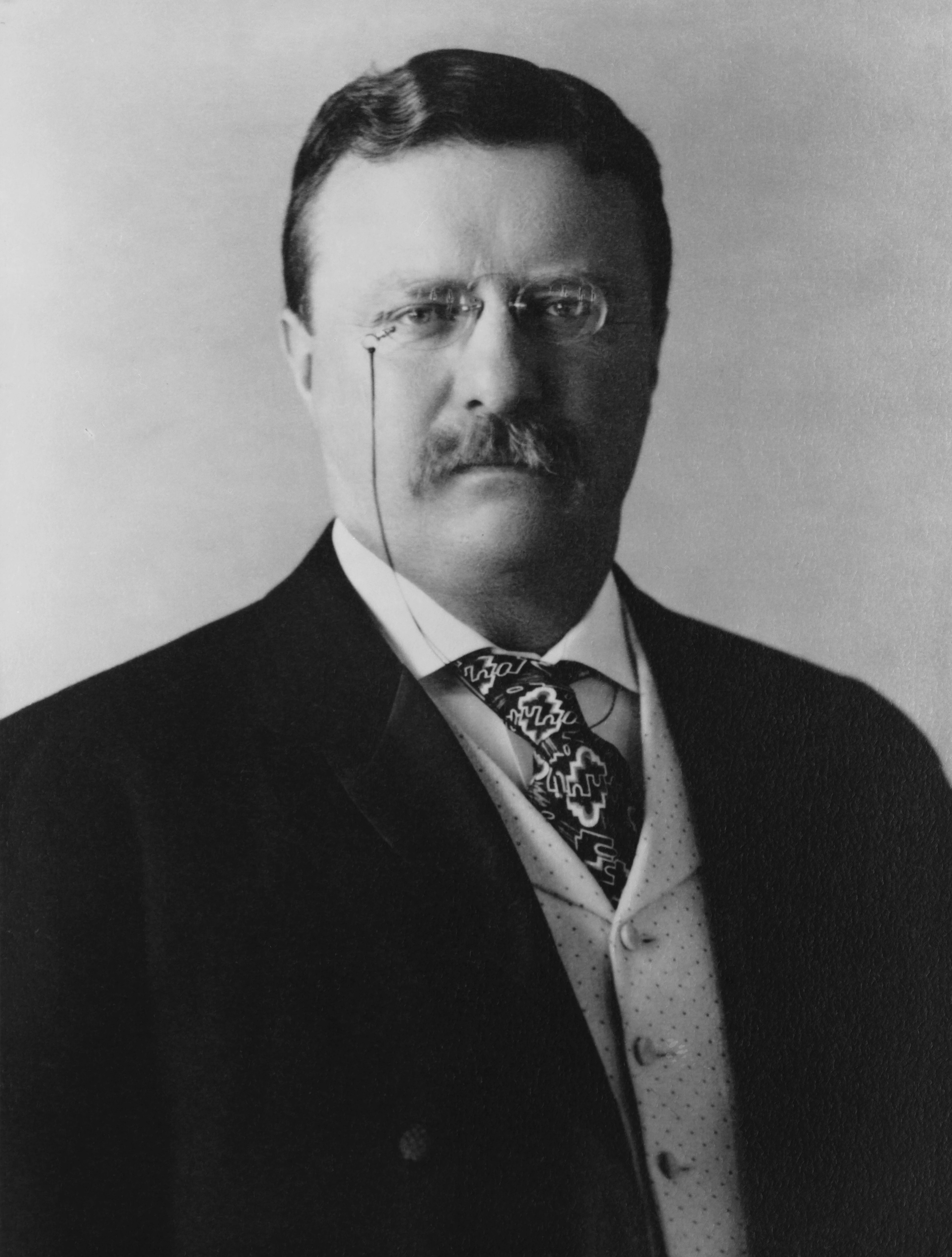
Quote 5:

Those sentiments are pretty moderate, though, compared to another comment so lengthy and so shockingly out of line with currently accepted expression that it deserves its own entry . . .
Friday, August 21, 2009
What's Wrong: Politics As Tribalism


Ex-Washington D.C. mayor Marion Barry.
Ex President of the United States George W. Bush.
Flip sides of the same coin. And proof positive of the nature of politics in America: tribalism.
I'm voting for the candidate who is most likely to be for me. I'm voting against the candidate who is most likely to be for you.
The competence of the opposition isn't particularly relevant. Even if the guy who is for me hasn't done a good job, I'd rather vote for him than the apparently competent guy who is for you.
In fact, a scoundrel, crook or idiot who is for me is better than a righteous, intelligent go-getter who is for you. Flaws in the candidate who's for you are crucial; those same traits in the guy who's for me might be virtues. If they're not virtues, they're forgiveable, and I'm mad at you for bringing them up.
Even if the guy who's "for me" isn't really for me; even if he's really for himself and his cronies, if he's willing to publicly accept the label of being for me, he's a better choice than the guy who's for you.
I'm horrified that people like you would continue to vote for guys like your guy despite all the evidence that he is the wrong man for the job. In fact, you must be stupid or worse to continue to support the likes of him. Meanwhile, I'm going to continue to vote for my guy, pretty much without any regard for what you might say or show about him.
------------------
All of that, by the way, is fine, to a point.
Where is America, in relation to that point?
To be continued . . .

If You Tilt Your Head Just Right And Squint . . .
. . . you can see the parallel:

See the similarity?
Sure you do.
Before Marvin Gaye's performance at the 1983 NBA All-Star game, singers were walking a minefield when they took improvisational liberties with the national anthem. Jose Feliciano tried it at game 5 of the 1968 World Series in Detroit, and the reaction from Establishment-aged folks was that he had been traitorously disrespectful. (Feliciano: "I didn't think I was doing anything wrong.") From then on, performers might embellish the Star Spangled Banner for youthful crowds where anti-Establishment statements were embraced, but in front of mainstream audiences, you sang it straight. If you didn't, the best you could hope for was that nobody noticed.
Gaye got huge props for his rendition of the anthem. Such huge props that he provoked scores of performers ever since to approach the song as if it were a jazz standard: a vehicle just waiting to be treated to their own interpretation; a tune that they, too, could use to make or enhance their artistic reputations, just like Marvin did. A few, like Whitney Houston at Super Bowl XXV, were successful. Many more, lacking the talent of a Gaye or a Houston, bored or bombed. Good or bad, we have Gaye to thank/blame for showing them that it was safe to go where angels had previously feared to tread.
As did Barack Obama. His elections to the Senate and the White House would have been unthinkable only a few short years before they actually happened, and his candidacy for each office was met with the laughter and scorn of folks who were sure that he had no chance. His victories will most certainly inspire many a politician to pursue long-shot campaigns that would have been given no hope by conventional wisdom and old-school pollsters.
Not coincidentally, it would seem that one such candidacy is for the Senate seat Obama vacated to enter the White House: that of Cheryle Jackson. Traditional political analysis would probably figure that the presidency of the Chicago Urban League, Jackson's current position, is an unlikely resume item to win friends and influence people in downstate Illinois. That analysis would also calculate that now is probably not the time for recent members of the staff of impeached governor Rod Blagojevich to be trying to capitalize on that credential.
It may well be that Ms. Jackson is the greatest Illinoisian since Abraham Lincoln, and that she will be able to prove it to the state's electorate. But whether she is Whitney Houston or someone who sends us to the refrigerator or bathroom with six minutes of over-wrought vocal gymnastics, it'll be obvious that Barack Obama was the Marvin Gaye who showed the way. We will certainly have him to thank/blame for countless improbable candidacies in the years to come.
See the similarity?
Sure you do.
Before Marvin Gaye's performance at the 1983 NBA All-Star game, singers were walking a minefield when they took improvisational liberties with the national anthem. Jose Feliciano tried it at game 5 of the 1968 World Series in Detroit, and the reaction from Establishment-aged folks was that he had been traitorously disrespectful. (Feliciano: "I didn't think I was doing anything wrong.") From then on, performers might embellish the Star Spangled Banner for youthful crowds where anti-Establishment statements were embraced, but in front of mainstream audiences, you sang it straight. If you didn't, the best you could hope for was that nobody noticed.
Gaye got huge props for his rendition of the anthem. Such huge props that he provoked scores of performers ever since to approach the song as if it were a jazz standard: a vehicle just waiting to be treated to their own interpretation; a tune that they, too, could use to make or enhance their artistic reputations, just like Marvin did. A few, like Whitney Houston at Super Bowl XXV, were successful. Many more, lacking the talent of a Gaye or a Houston, bored or bombed. Good or bad, we have Gaye to thank/blame for showing them that it was safe to go where angels had previously feared to tread.
As did Barack Obama. His elections to the Senate and the White House would have been unthinkable only a few short years before they actually happened, and his candidacy for each office was met with the laughter and scorn of folks who were sure that he had no chance. His victories will most certainly inspire many a politician to pursue long-shot campaigns that would have been given no hope by conventional wisdom and old-school pollsters.
Not coincidentally, it would seem that one such candidacy is for the Senate seat Obama vacated to enter the White House: that of Cheryle Jackson. Traditional political analysis would probably figure that the presidency of the Chicago Urban League, Jackson's current position, is an unlikely resume item to win friends and influence people in downstate Illinois. That analysis would also calculate that now is probably not the time for recent members of the staff of impeached governor Rod Blagojevich to be trying to capitalize on that credential.
It may well be that Ms. Jackson is the greatest Illinoisian since Abraham Lincoln, and that she will be able to prove it to the state's electorate. But whether she is Whitney Houston or someone who sends us to the refrigerator or bathroom with six minutes of over-wrought vocal gymnastics, it'll be obvious that Barack Obama was the Marvin Gaye who showed the way. We will certainly have him to thank/blame for countless improbable candidacies in the years to come.
Thursday, July 23, 2009
Professor Gates' Disconnect
By now, we all know which facts are beyond dispute: Harvard professor/celebrity Henry Louis Gates came home to Cambridge from a trip, found his front door jammed, and enlisted his driver in forcing it open. Someone observing the scene called police and reported it as a break-in. Police officers arrived, questioned Gates, and eventually learned that he did indeed live at the house.
We don't know who said what wrong thing first, or how the incident escalated, but Gates was not pleased with some part of the encounter, and asked the investigating officer for his name and badge number. The officer exited Gates' home through the front door, Gates followed him, and was arrested on his front porch for disorderly conduct. The charges were quickly dropped.
Gates has discussed the incident as if it is an example of how black men in America are treated by police. He's right about part of the equation. If you're an average guy in an encounter with a police officer, his badge gives him license to hold all negative attitudes -- yours and his -- against you. Unless and until all the traditional negative attitudes have disappeared from black-white encounters, a black man running into a white cop is likely to end up on the receiving end of a few more negatives than his white neighbor crossing the path of that same cop. Gates, like Leroy Average Brother, has reason to think that his close encounter with police went sour more quickly than it would have if he looked different.
Gates probably knows that there are Harvard professor/celebrities who would have been treated like the big shot pillars of the community they consider themselves to be. "Very sorry sir, nothing personal. All we knew was that we got a phone tip that two men were breaking in the front door. We're glad it turned out to be a false alarm, and we want you to know we're here for you in case the call is real next time. Are you all set with getting that door fixed?"
It's also probable that what Gates got instead was tone and body language that said something more like, "Who the hell are you to be questioning me? You're lucky I didn't dent your skull for taking too long to show me some ID." It's a very rare black man vs. police encounter where both behave as if law enforcement is the side that has to be careful and accommodating. Almost every black man in America knows that he doesn't have status that trumps a police officer's feeling that he is freer to vent on you than your neighbor.
Galling as that fact may be, though, it's still worth Gates' time to recognize that while he may have been lined up for disrespect for the same reason as Mr. Average Brother, that dis took far less severe form than Leroy would have expected. Insert Leroy into the scene -- upscale neighborhood, report of a burglary, front door forced open, Leroy Average Brother found inside -- our boy Leroy is lucky to avoid becoming the latest Amadou Diallo. If Leroy happens to go unshot, he'd know to cut his losses at the scene, hold his temper and tongue, and express any irritation about the incident to someone other than the offending officer. And if Leroy couldn't help venting his frustration, even if only by running off at the mouth, he'd likely have some cuts, bruises and lumps to show for it, along with some extra charges like resisting arrest and assaulting a police officer. Gates told officers that he was uncomfortable with his arms cuffed behind his back and the arresting officers loosed his wrists and recuffed them in front of him. Think they would have done the same for Leroy?
If the reaction to Gates' trauma is something less than boiling outrage even from the Leroys of America, it's probably not because they think race is no factor in police treatment of black men. It's more likely that folks are feeling the disconnect between Gates' treatment and his reaction.
If Gates had received the Leroy treatment, had lumps on his head, broken bones and swollen eyes, there'd be a wave of anger as a result. Millions would be upset at the demonstration that the wrong appearance makes you unsafe from the police in your own home. Getting denied the upper-crust treatment you think you've earned doesn't quite have the same widespread resonance. This is not nearly Rodney King; it's a bit more like Oprah being turned away from the Hermes shop in Paris.
The most obvious solution when you're denied the BMOC/HNIC treatment: make the mope recognize that he should have known who he was messing with. Make some phone calls. Pull some strings. Get the guy transferred to a hellhole. Or fired. Behind the scenes, leaving no fingerprints. Let him and his former coworkers suspect that the day his life started to spiral downhill was the day he got on your bad side.
Gates will serve his image well if he can get satisfaction for his personal insult in that kind of private way. He'll make better use of his public platform by focusing attention on how Leroy gets treated.
We don't know who said what wrong thing first, or how the incident escalated, but Gates was not pleased with some part of the encounter, and asked the investigating officer for his name and badge number. The officer exited Gates' home through the front door, Gates followed him, and was arrested on his front porch for disorderly conduct. The charges were quickly dropped.
Gates has discussed the incident as if it is an example of how black men in America are treated by police. He's right about part of the equation. If you're an average guy in an encounter with a police officer, his badge gives him license to hold all negative attitudes -- yours and his -- against you. Unless and until all the traditional negative attitudes have disappeared from black-white encounters, a black man running into a white cop is likely to end up on the receiving end of a few more negatives than his white neighbor crossing the path of that same cop. Gates, like Leroy Average Brother, has reason to think that his close encounter with police went sour more quickly than it would have if he looked different.
Gates probably knows that there are Harvard professor/celebrities who would have been treated like the big shot pillars of the community they consider themselves to be. "Very sorry sir, nothing personal. All we knew was that we got a phone tip that two men were breaking in the front door. We're glad it turned out to be a false alarm, and we want you to know we're here for you in case the call is real next time. Are you all set with getting that door fixed?"
It's also probable that what Gates got instead was tone and body language that said something more like, "Who the hell are you to be questioning me? You're lucky I didn't dent your skull for taking too long to show me some ID." It's a very rare black man vs. police encounter where both behave as if law enforcement is the side that has to be careful and accommodating. Almost every black man in America knows that he doesn't have status that trumps a police officer's feeling that he is freer to vent on you than your neighbor.
Galling as that fact may be, though, it's still worth Gates' time to recognize that while he may have been lined up for disrespect for the same reason as Mr. Average Brother, that dis took far less severe form than Leroy would have expected. Insert Leroy into the scene -- upscale neighborhood, report of a burglary, front door forced open, Leroy Average Brother found inside -- our boy Leroy is lucky to avoid becoming the latest Amadou Diallo. If Leroy happens to go unshot, he'd know to cut his losses at the scene, hold his temper and tongue, and express any irritation about the incident to someone other than the offending officer. And if Leroy couldn't help venting his frustration, even if only by running off at the mouth, he'd likely have some cuts, bruises and lumps to show for it, along with some extra charges like resisting arrest and assaulting a police officer. Gates told officers that he was uncomfortable with his arms cuffed behind his back and the arresting officers loosed his wrists and recuffed them in front of him. Think they would have done the same for Leroy?
If the reaction to Gates' trauma is something less than boiling outrage even from the Leroys of America, it's probably not because they think race is no factor in police treatment of black men. It's more likely that folks are feeling the disconnect between Gates' treatment and his reaction.
If Gates had received the Leroy treatment, had lumps on his head, broken bones and swollen eyes, there'd be a wave of anger as a result. Millions would be upset at the demonstration that the wrong appearance makes you unsafe from the police in your own home. Getting denied the upper-crust treatment you think you've earned doesn't quite have the same widespread resonance. This is not nearly Rodney King; it's a bit more like Oprah being turned away from the Hermes shop in Paris.
The most obvious solution when you're denied the BMOC/HNIC treatment: make the mope recognize that he should have known who he was messing with. Make some phone calls. Pull some strings. Get the guy transferred to a hellhole. Or fired. Behind the scenes, leaving no fingerprints. Let him and his former coworkers suspect that the day his life started to spiral downhill was the day he got on your bad side.
Gates will serve his image well if he can get satisfaction for his personal insult in that kind of private way. He'll make better use of his public platform by focusing attention on how Leroy gets treated.
Wednesday, July 8, 2009
Michael Jackson
Broad poetic license is granted for the purpose of praising the dearly departed in the course of a eulogy.
So when Magic Johnson told the world that watching Michael Jackson made him a better point guard, heads were cocked and eyebrows were raised not because the words were out of character for the moment.
It was because they were unnecessary. Magic didn't need to exaggerate to give Michael Jackson the praise he deserved. Later speakers, like Berry Gordy, groped for the correct note. But when Gordy found it, he and everybody else heard that it rang true, and the bell has been sounding ever since.
Michael Jackson was the greatest entertainer ever.
"Greatest" does not necessarily mean "most talented." Jackson didn't compose as much or as well as Stevie Wonder or Smokey Robinson. He didn't have the vocal chops of Luther Vandross or the instrumental virtuosity of Prince. He didn't stamp a single sonic style for all time the way James Brown did. Sammy Davis was Jackson's peer in singing and dancing, plus he had enough extra skill in acting, comedy and impressions to win an overall talent decathlon.
But greatness is measured by more than the height of a performer's peak. Roger Maris hit 61 home runs in a single season and Hank Aaron's one-year best was only 47, but nobody would dare to suggest that Maris was a better home run hitter. Greatness is a measure of the sum total of your flight path: how high, how far, and for how long. Add up those columns, and Jackson can't be matched.
How high did MJ fly? His His Motown career with his brothers began with four straight singles that went to number one on Billboard's U.S. pop charts. He went even higher as a solo artist: five straight multiplatinum albums, one of which, as everyone knows, is the top-selling album of all time. 12 number one singles, and 13 more that were in the top ten.
The distance of the Jackson flight pattern was unprecedented, and it's not likely to be duplicated. Jackson came along when the development of technology enabled facts, sounds, images, and people to move around the globe with an ease unknown to prior generations. Cultural fads that took months to cross oceans during Sinatra's peak years and weeks at the start of Beatlemania happened in a matter of days when Thriller was released. And the whole world saw the premiere of Black Or White at about the same time.
Jackson's career was perfectly timed to take advantage of shifting trends in another way: during his prime, more of the world than ever before began to use the new ease of travel and transport to import American culture. The fraying of the Soviet Bloc and the end of the Cold War opened up new markets for Coca-Cola and McDonald's, but they also meant that Beat It and Bad were not seen as evil capitalist symbols the way Blue Suede Shoes and Hound Dog would have been. The result: Michael Jackson played to sellout crowds in football-sized stadiums not just in New York, London, Tokyo and Paris, but also in Moscow, Prague, Budapest, Bucharest and Warsaw. Add those cities to Jackson concert stops that would have been too much trouble to reach in 1955 or 1965, like Tunis and Tel Aviv, Mumbai and Manila, Bangkok and Buenos Aires, plus Cape Town, Santiago, Mexico City and Sao Paolo, and you've got a star whose reach could not have been imagined in the world that existed at the start of his career.
The increasing ease of information transfer helped make Jackson a star whose like had not been seen, and it's also likely to keep him from being eclipsed. The world had opened up just enough for everybody to be a recipient of the same information in the 80s and 90s, but it hadn't quite reached its current point -- where everybody can generate and disseminate their own information. Today's audience is more fragmented and has more producers creating content for every identifiable niche. Which makes it much more difficult to reach the kind of cross-section of viewers and listeners to make a Thriller-sized blockbuster possible. In 2009, a would-be Michael Jackson might spring his own version of the moonwalk at a broadcast like Motown 25, but fewer homes will have three generations of viewers sitting around the same TV to see it. Grown men will be watching ESPN, little kids will have Disney on their own sets, plenty of women will be watching Lifetime, and the core music-consuming audience of teens and twentysomethings will spend less time being awestruck than their 80s counterparts and more time trying to create knockoffs, spoofs, and superior moves to upload to YouTube. With so many more distractions in today's media world, it'll be hard for anybody to grab as much attention as MJ did at his best.
The duration of Jackson's stardom will be just as tough to match. I Want You Back, the Jackson 5's first Motown hit and a Billboard #1 single, was released in 1969. You Rock My World, Michael's last single to reach the top ten on the Billboard pop charts in the U.S., was released in 2001. That 32-year span, remarkable when considered in isolation, is even more majestic when viewed in comparison to the longevity of other music icons. In 1995, 32 years from the Beatles' first appearance in the Billboard U.S. top ten, Paul McCartney was ten years past his most recent top ten single. In 1987, 32 years after Elvis Presley's first charting single, he was 15 years past his last top ten single and ten years gone from the face of the earth. Jackson's stardom was steady during that long span. Either as a solo artist or in combination with his brothers or others, he had at least one top ten single in 13 of the 20 years from 1970 to 1989, and six more in the 1990s.
Jackson's longevity is the obvious explanation for the outpouring of emotion triggered by his passing. We've known Michael Jackson for 40 years. For the first twenty years, we'd seen nothing more sinister than a sad dissatisfaction with his appearance and a harmlessly weird reluctance to grow up. By the time things began to look worse, we'd known and liked him for so long that some of us refused to believe he'd done anything wrong, others wished he hadn't, and plenty more preferred to avert our eyes and thoughts. Until the end, we'd hoped against hope that he could find the uncompromised happiness that filled so much of his music. His death makes it clear that there will be no such finding for him in this life, and that's a sad fact to have to digest.
So when Magic Johnson told the world that watching Michael Jackson made him a better point guard, heads were cocked and eyebrows were raised not because the words were out of character for the moment.
It was because they were unnecessary. Magic didn't need to exaggerate to give Michael Jackson the praise he deserved. Later speakers, like Berry Gordy, groped for the correct note. But when Gordy found it, he and everybody else heard that it rang true, and the bell has been sounding ever since.
Michael Jackson was the greatest entertainer ever.
"Greatest" does not necessarily mean "most talented." Jackson didn't compose as much or as well as Stevie Wonder or Smokey Robinson. He didn't have the vocal chops of Luther Vandross or the instrumental virtuosity of Prince. He didn't stamp a single sonic style for all time the way James Brown did. Sammy Davis was Jackson's peer in singing and dancing, plus he had enough extra skill in acting, comedy and impressions to win an overall talent decathlon.
But greatness is measured by more than the height of a performer's peak. Roger Maris hit 61 home runs in a single season and Hank Aaron's one-year best was only 47, but nobody would dare to suggest that Maris was a better home run hitter. Greatness is a measure of the sum total of your flight path: how high, how far, and for how long. Add up those columns, and Jackson can't be matched.
How high did MJ fly? His His Motown career with his brothers began with four straight singles that went to number one on Billboard's U.S. pop charts. He went even higher as a solo artist: five straight multiplatinum albums, one of which, as everyone knows, is the top-selling album of all time. 12 number one singles, and 13 more that were in the top ten.
The distance of the Jackson flight pattern was unprecedented, and it's not likely to be duplicated. Jackson came along when the development of technology enabled facts, sounds, images, and people to move around the globe with an ease unknown to prior generations. Cultural fads that took months to cross oceans during Sinatra's peak years and weeks at the start of Beatlemania happened in a matter of days when Thriller was released. And the whole world saw the premiere of Black Or White at about the same time.
Jackson's career was perfectly timed to take advantage of shifting trends in another way: during his prime, more of the world than ever before began to use the new ease of travel and transport to import American culture. The fraying of the Soviet Bloc and the end of the Cold War opened up new markets for Coca-Cola and McDonald's, but they also meant that Beat It and Bad were not seen as evil capitalist symbols the way Blue Suede Shoes and Hound Dog would have been. The result: Michael Jackson played to sellout crowds in football-sized stadiums not just in New York, London, Tokyo and Paris, but also in Moscow, Prague, Budapest, Bucharest and Warsaw. Add those cities to Jackson concert stops that would have been too much trouble to reach in 1955 or 1965, like Tunis and Tel Aviv, Mumbai and Manila, Bangkok and Buenos Aires, plus Cape Town, Santiago, Mexico City and Sao Paolo, and you've got a star whose reach could not have been imagined in the world that existed at the start of his career.
The increasing ease of information transfer helped make Jackson a star whose like had not been seen, and it's also likely to keep him from being eclipsed. The world had opened up just enough for everybody to be a recipient of the same information in the 80s and 90s, but it hadn't quite reached its current point -- where everybody can generate and disseminate their own information. Today's audience is more fragmented and has more producers creating content for every identifiable niche. Which makes it much more difficult to reach the kind of cross-section of viewers and listeners to make a Thriller-sized blockbuster possible. In 2009, a would-be Michael Jackson might spring his own version of the moonwalk at a broadcast like Motown 25, but fewer homes will have three generations of viewers sitting around the same TV to see it. Grown men will be watching ESPN, little kids will have Disney on their own sets, plenty of women will be watching Lifetime, and the core music-consuming audience of teens and twentysomethings will spend less time being awestruck than their 80s counterparts and more time trying to create knockoffs, spoofs, and superior moves to upload to YouTube. With so many more distractions in today's media world, it'll be hard for anybody to grab as much attention as MJ did at his best.
The duration of Jackson's stardom will be just as tough to match. I Want You Back, the Jackson 5's first Motown hit and a Billboard #1 single, was released in 1969. You Rock My World, Michael's last single to reach the top ten on the Billboard pop charts in the U.S., was released in 2001. That 32-year span, remarkable when considered in isolation, is even more majestic when viewed in comparison to the longevity of other music icons. In 1995, 32 years from the Beatles' first appearance in the Billboard U.S. top ten, Paul McCartney was ten years past his most recent top ten single. In 1987, 32 years after Elvis Presley's first charting single, he was 15 years past his last top ten single and ten years gone from the face of the earth. Jackson's stardom was steady during that long span. Either as a solo artist or in combination with his brothers or others, he had at least one top ten single in 13 of the 20 years from 1970 to 1989, and six more in the 1990s.
Jackson's longevity is the obvious explanation for the outpouring of emotion triggered by his passing. We've known Michael Jackson for 40 years. For the first twenty years, we'd seen nothing more sinister than a sad dissatisfaction with his appearance and a harmlessly weird reluctance to grow up. By the time things began to look worse, we'd known and liked him for so long that some of us refused to believe he'd done anything wrong, others wished he hadn't, and plenty more preferred to avert our eyes and thoughts. Until the end, we'd hoped against hope that he could find the uncompromised happiness that filled so much of his music. His death makes it clear that there will be no such finding for him in this life, and that's a sad fact to have to digest.
Subscribe to:
Posts (Atom)